Hive Mind
Crafting an interactive digital environment to intuitively bring awareness to women's concerns


Sector Role Team Size Function Tools
Education Designer Individual Game Unity Game Engine
Interactive Environment
01 The Challenge (Opportunity!)
Studies show that non-lecture based learning can improve people's understanding of a topic (Nawabi et al.,). How do we educate the public on women's thoughts without using notes, a lecture, or slides? How do we encourage an audience to empathize and understand their concerns on a more realistic, intimate level?
2 week timeline.


02 Background (A need for...)
A saying people have tossed about goes, "no one can know the mind of a woman." This phrase is both problematic and intriguing, often used in scenarios to subtly dismiss a woman's concerns or actions by implying that that thought is inherently impossible to understand, nonsensical, and irrelevant.
Thus, I set to create a project, investigating methods to subvert this form of thinking.
03 Target Group & Research
I initiated an ethnographic research study focused on the everyday thoughts and concerns of women to build a foundation rooted in real-world experiences.
The most direct entry point was through anonymous surveys, designed to capture unfiltered reflections of participants’ recent thoughts. These were disseminated across the Carnegie Mellon campus and online channels to ensure response diversity, with an explanation of how their data would be used.
After the initial 46 participants (eventually 60+), a systematic thematic analysis was conducted. Responses were qualitatively coded, clustered, and distilled into 8 central categories, with gender-specific concerns bolded (e.g., the complexities of dating another woman as a woman).
The majority of thoughts were not gendered, and there were thoughts from vastly different ends of the political spectrum. Despite being prompted to share anything, participants' thoughts consistently reflected themes of anxiety and worry.

Arranged notes several ways, through affinity mapping and conducting a thematic analysis on the 46 (later 62), responses received.
This body of concerns highlighted that the final product needed to dually portray these perspective as being from women, while emphasizing that the data tended to reflect innately human, not gendered, information.
The findings informed the next phase: ideation and prototyping of communication forms that could both surface these concerns and create space for awareness, empathy, and dialogue.
04 Ideation & Visual Style
Initial display ideas ranged from a physical art installation (pop-up), a metaphorical identity shop, a diary-like app, to a video game, which diverged into creating a more literal open-world exploratory game.
The final idea of an open-world exploratory game contained all the data points (thoughts) displayed as white text immersed in a world which represented an ironic representation of the "female" brain.

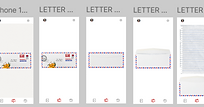


Sketched v1, v2, v3 iterative drafts of various open-world visuals.
The concept of displaying the 'hidden' thoughts as floating text boxes was selected to capture a user's attention at first glance: by rendering the text readable only at certain angles, the inherently intimate nature of the thoughts paired with the player's movement required to discover any knowledge incentivized a user's curiosity in the process of reading, and by doing so, encouraged users to continue walking in the world, ponder, and thus learn about this open, shared collection of complex human emotions.
This direct connection between the thoughts of real people and the player would foster a sense of empathy in the user as they naturally walked through the worries in the world, with a myriad of intestinal, brain-like structures mirroring both complex mazes and wide-open plains.
The count of each data point in each of the 8 main categories was represented by the frequency of the appearance of symbols/semantic carriers of meaning (e.g. seven 3D models of a bus --> seven education-themed concerns).
The initial visual concept was influenced by Grecian settings and a fresh aesthetic, emphasizing self-discovery and a sense of openness.

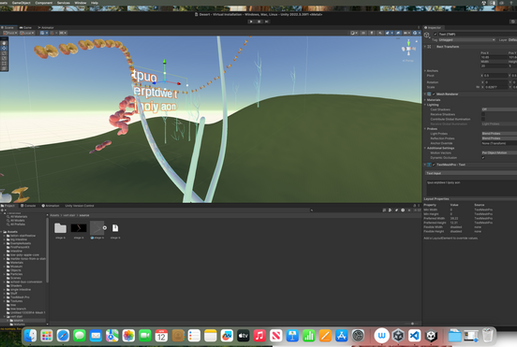
After a round of user testing, I selected the intestine-like/brain-like pink structures for the user to travel on to draw further attention to certain groups of text through visual contrast, and to allow the user to experience some degree of emotional discomfort, allowing the emotional connotation associated with exposing one's internal organs to influence one's mind as they wandered.

05 Reflection
Physical experience launched for a week at The Frame in Pittsburgh, Pennsylvania.
A key challenge was moving from raw data (personal thoughts and worries) to design opportunities while preserving participants’ concerns. My desire was to balance empathy with responsibility when translating research insights, and to surface worries as valid experiences.
These findings also led to consideration on whether products should directly ‘solve’ anxieties, or create a more open space for awareness, dialogue, and support. This could inadvertently aid the root of the issue as well-- consequently, this research has shifted my perspective from direct solutionism towards considering works that promote empowerment and educate through indirect ways.